
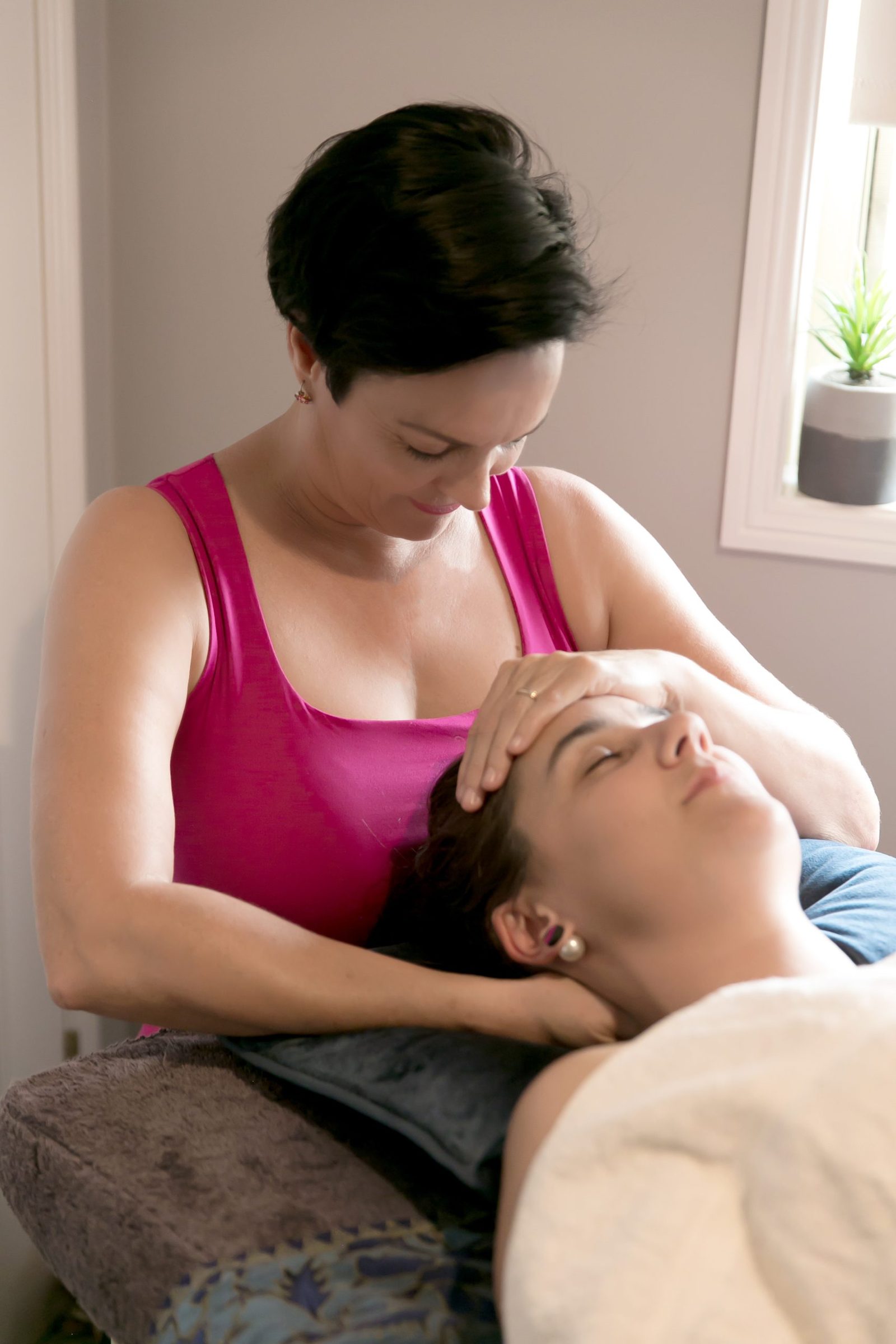
Discover the power of Reiki
Reiki, pronounced Ray Kee, is a unique therapeutic practice that originated in Japan. This technique focuses on restoring balance to the body’s energy centres, promoting overall wellbeing. With a history dating back to the 1920s and its introduction to the West in the 1970s by a Hawaiian Japanese woman, Reiki has been passed down from teacher to student. Many people find that Reiki brings a sense of calm. It is a hands-on therapy, often accompanied by gentle heat. Acting as a facilitator, a Reiki practitioner taps into the universal energy flow, assisting the body in aligning and rebalancing itself.
Step into a Reiki Treatment
During a Reiki session, a trained practitioner will guide you through various hand positions that are placed gently on your body. These positions include four on the head and crown, as well as six other positions across the torso and body. Resting comfortably on a massage table in a softly lit room, you will be draped with a light towel or sheet throughout the treatment to ensure utmost comfort. It is important to note that the touch during a Reiki session is never intended to be intimate or uncomfortable. As you lie back, your body will enter a state of deep relaxation, and you may choose to close your eyes, allowing yourself to fully embrace this restorative experience. Relaxing background music will be played to enhance the overall ambiance, while avoiding any distracting scents, instruments, or disruptions.
A Unique Experience at Zest Infusion
Reiki is a hands-on treatment aimed at balancing the body’s energy centres or chakras. However, at Zest Infusion, we provide Reiki without additional elements such as instruments, drums, singing bowls, crystals or incense like sage or sandalwood. We focus solely on the Reiki technique, employing skilled practitioners who have been initiated in the art of Reiki therapy. Our goal is to ensure that your treatment is centred around your comfort and overall wellbeing.
Embrace the After Effects of Reiki
Following a Reiki session, it is common for individuals to feel a profound sense of calmness, like waking up after a restful sleep or rejuvenating nap. To maintain a healthy energy flow, it is recommended to hydrate by drinking water after your Reiki treatment.
When People Choose Reiki
Reiki is a complementary relaxation practice, not a substitute for medical or psychological treatment. People choose Reiki sessions at Zest Infusion alongside their usual care, often at times such as:
- Anxiety, phobias, and social anxiety
- Depression
- Grief and loss
- Pain management
- Relaxation during medical treatment, in consultation with the treating team
- Fertility issues
- Stress reduction
- Sleep problems
- Relationship difficulties
- Life transitions and changes
What the Research Says
A small number of studies have explored the effect of Reiki on pain, stress and mood, and some have reported improvements (Bowden, 2011; Fumiko et al., 2016; Dogan, 2018). In one trial, students who received Reiki showed a progressive improvement in mood, particularly at the five-week follow-up, while no change was observed in the control group (Bowden et al., 2010). These are small studies, and larger reviews have found the overall evidence for Reiki to be limited, so it is best thought of as a relaxation practice that some people find helpful.
Incorporating Reiki into your holistic wellbeing journey at Zest Infusion can offer profound benefits for your overall wellness. To learn more or schedule a Reiki session with Rachel Wilkinson, please don’t hesitate to contact us. We are here to assist you on your path to total wellbeing.
References
Bat, (2021)The effects of reiki on heart rate, blood pressure, body temperature, and stress levels: A pilot randomized, double-blinded, and placebo-controlled study**. **https://www.sciencedirect.com/science/article/abs/pii/S174438812100027X
Bowden,D. Goddard,L. Gruzelier, J. (201) A Randomised Controlled Single-Blind Trial of the Efficacy of Reiki at Benefitting Mood and Well-Being, Evidence-Based Complementary and Alternative Medicine, vol. 2010, Article ID 381862, 8 pages, 2010. https://doi.org/10.1155/2011/381862
Bowden, Goddard & Gruzelier (2011) A randomised controlled single-blind trial of the efficacy of reiki at benefitting mood and well-being.
Dogan, M.D, (2021) The effect of reiki on pain: A meta-analysis. Complementary therapies in clinical practice, Vol 31, 2018, P 384 -387 https://doi.org/10.1016/j.ctcp.2018.02.020.
Fumiko Sato Kurebayashi, L.Turrini, R.N.T, Pavarini Borges de Souza, T et al., (2016)https://www.ncbi.nlm.nih.gov/pmc/articles/PMC5172615/